Laser Cut Planter Box Files: How to Choose a Design and Size
A laser cut planter box is a quick way to turn flat sheets into home decor, a table centerpiece or a craft fair product. Before you cut, decide where it will stand, how big it should be and what material you have.
Pick a design by where it will be used
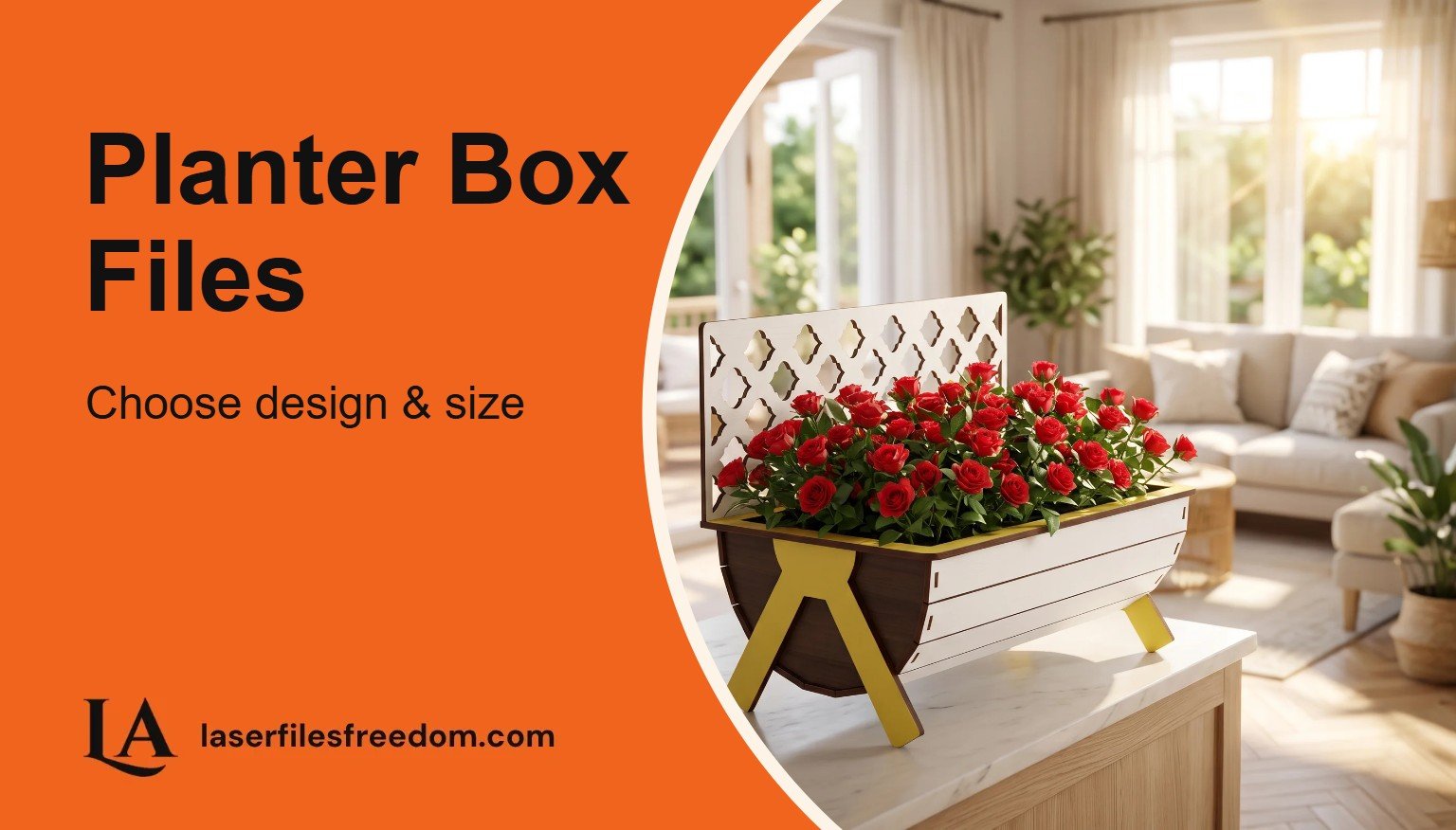
- Planter with trellis: a lattice back for a windowsill, balcony or entryway.
- Window box planter: shutters and a picket fence, designed for 6 mm (1/4 in) material and about 69 cm wide.
- Butterfly planter: a flower box for spring tables and gifts.
- Fence flower box: a picket fence design that works well as a set in several sizes.
Match the file to your material thickness
Slot-together parts depend on thickness. Measure your sheet with calipers, then open the version made for it. Do not simply scale a 3 mm file to fit 4 mm stock, because the slots and the whole model change together.
In the trellis planter, the 3 mm version assembles to 262 × 170 × 216 mm (10.3 × 6.7 × 8.5 in), 4 mm to 349 × 225 × 288 mm (13.7 × 8.9 × 11.3 in), and 6 mm to 524 × 338 × 433 mm (20.6 × 13.3 × 17.0 in). Check that the largest parts fit your laser bed.
Protect the wood from water and soil
- Keep plants in their own pots with saucers, or add a waterproof liner.
- Seal or paint the parts, including the edges.
- For outdoor use, choose exterior-rated material and expect to refinish it. Ordinary indoor plywood can swell and separate.
- Glue the joints for any planter that will carry weight.
Before cutting the full set
Cut one joint as a test. If it is loose or too tight, see our guide to fixing kerf and fit. For sheet selection, read about the best plywood for laser cutting.
How to size a laser cut planter box
Choose the size of your laser cut planter box from the plant pot, not only from the picture. Measure the pot’s width and height, add room for a saucer and compare the result with the inside of the planter. The listed assembled sizes are outer dimensions, so the usable space is smaller. A small butterfly planter suits succulents, while a larger fence flower box or window box makes a stronger display.
Materials and file formats
The planter files are digital downloads in SVG, DXF, CDR, AI and PDF formats. SVG and DXF open in most laser and vector programs. Plywood is the usual choice. Some files also list MDF or acrylic, so check the product page. MDF takes paint smoothly but handles moisture poorly unless it is a moisture-resistant grade that is well sealed.
Assembly steps
- Measure your sheet and open the matching file.
- Test one joint before cutting everything.
- Cut the parts and dry assemble the planter box.
- Seal or paint the surfaces and edges.
- Glue the joints and let them dry before adding a pot.
Common mistakes to avoid
- Putting soil directly against unprotected wood.
- Starting a large version without checking the laser bed size.
- Skipping glue on a planter that will carry weight.
Planter box FAQ
Can a laser cut planter box stay outdoors?
It can if you use exterior-rated material and seal every surface, but expect regular maintenance. A laser cut planter box used indoors will usually last longer.
Which thickness should I choose?
Use the thickness that matches the size you want and that your laser can cut cleanly. Thicker versions in these files assemble into larger planters.
If you plan to sell finished planters at a craft fair, build one sample first and note the material used, the cutting time and the finishing time. Those numbers help you set a realistic price.
Browse all laser cut planter and flower pot files.